

In the realm of industrial automation systems, the issue of power quality has become increasingly prominent. Harmonics, in particular, can cause a variety of problems, from equipment overheating to inaccurate control signals. As a supplier of Capacitor Harmonic Filters, I often get asked whether these filters can be effectively used in industrial automation systems. In this blog post, I will delve into this question, exploring the technical aspects, benefits, and potential challenges of using Capacitor Harmonic Filters in such systems.
Understanding Harmonics in Industrial Automation Systems
Industrial automation systems rely heavily on a wide range of electrical equipment, including variable frequency drives (VFDs), programmable logic controllers (PLCs), and servo motors. These devices often draw non - sinusoidal currents, which generate harmonics. Harmonics are multiples of the fundamental frequency (usually 50 or 60 Hz) and can distort the voltage and current waveforms in the electrical system.
The presence of harmonics can lead to several detrimental effects in industrial automation systems. For example, excessive harmonics can cause overheating in transformers, motors, and cables, reducing their lifespan and increasing the risk of equipment failure. They can also interfere with the operation of sensitive electronic devices, such as PLCs and sensors, leading to inaccurate readings and control malfunctions.
How Capacitor Harmonic Filters Work
A Capacitor Harmonic Filter Capacitor Harmonic Filter is a device designed to mitigate the effects of harmonics in an electrical system. It consists of capacitors and inductors connected in a specific configuration to create a resonant circuit. This resonant circuit is tuned to a particular harmonic frequency or a range of frequencies.
When a Capacitor Harmonic Filter is installed in an electrical system, it provides a low - impedance path for the harmonic currents. As a result, the harmonic currents are diverted through the filter instead of flowing through the main electrical equipment. This helps to reduce the harmonic distortion in the system and improve the power quality.
Benefits of Using Capacitor Harmonic Filters in Industrial Automation Systems
1. Improved Equipment Reliability
By reducing the harmonic distortion, Capacitor Harmonic Filters can significantly improve the reliability of electrical equipment in industrial automation systems. Motors and transformers will operate at lower temperatures, reducing the risk of insulation breakdown and extending their service life. Sensitive electronic devices will be less prone to interference, ensuring accurate operation and reducing the likelihood of control failures.
2. Energy Efficiency
Harmonic currents can cause additional losses in the electrical system, leading to increased energy consumption. Capacitor Harmonic Filters can reduce these losses by diverting the harmonic currents away from the main electrical equipment. This results in lower energy bills and a more efficient use of electrical power.
3. Compliance with Standards
Many industries are subject to power quality standards and regulations. For example, the IEEE 519 standard sets limits on the allowable harmonic distortion in electrical systems. Using Capacitor Harmonic Filters can help industrial automation systems meet these standards, avoiding potential fines and ensuring compliance with regulatory requirements.

4. Cost - Effectiveness
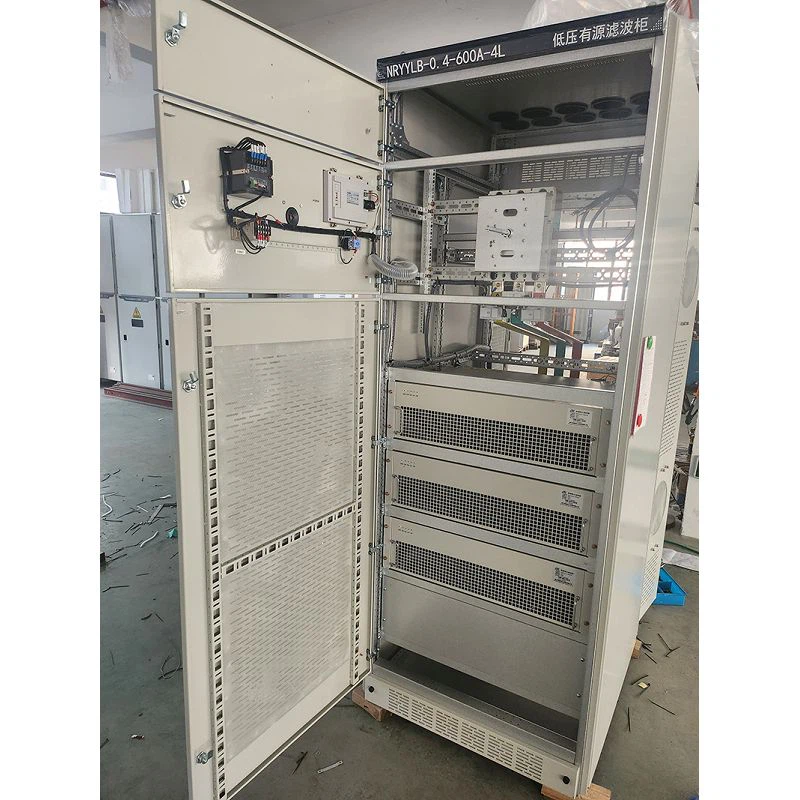
Compared to other types of harmonic mitigation devices, such as High Quality Shunt Active Power Filter or Active harmonic filter module, Capacitor Harmonic Filters are often more cost - effective. They have a relatively simple design and lower initial installation costs, making them an attractive option for many industrial applications.
Potential Challenges and Considerations
1. Resonance Issues
One of the main challenges associated with Capacitor Harmonic Filters is the potential for resonance. If the filter is not properly designed or tuned, it can interact with the system impedance and cause resonance at certain frequencies. Resonance can lead to a significant increase in the harmonic currents, which can be even more damaging than the original harmonic distortion. Therefore, it is crucial to perform a detailed system analysis before installing a Capacitor Harmonic Filter to ensure that resonance issues are avoided.
2. Limited Frequency Range
Capacitor Harmonic Filters are typically tuned to a specific harmonic frequency or a narrow range of frequencies. This means that they may not be effective in mitigating harmonics at frequencies outside of their tuning range. In some industrial automation systems, where there are multiple harmonic frequencies present, a combination of different types of filters may be required to achieve comprehensive harmonic mitigation.
3. Maintenance Requirements
Capacitor Harmonic Filters require regular maintenance to ensure their proper operation. The capacitors and inductors in the filter can degrade over time, and their performance may be affected by factors such as temperature and humidity. Periodic inspections and testing are necessary to detect any potential problems and replace the worn - out components in a timely manner.
Case Studies
To illustrate the effectiveness of Capacitor Harmonic Filters in industrial automation systems, let's look at a few case studies.
In a large manufacturing plant, the installation of Capacitor Harmonic Filters resulted in a significant reduction in motor overheating. Prior to the installation, several motors were experiencing frequent breakdowns due to excessive harmonic currents. After the filters were installed, the motor temperatures dropped by an average of 15°C, and the frequency of motor failures was reduced by more than 50%.
In another case, a food processing facility was struggling with inaccurate sensor readings and control malfunctions in its automation system. The harmonic distortion in the electrical system was causing interference with the operation of the sensors and PLCs. By installing Capacitor Harmonic Filters, the harmonic distortion was reduced from over 20% to less than 5%, and the accuracy of the sensor readings and control signals improved significantly.
Conclusion
In conclusion, a Capacitor Harmonic Filter can be a valuable addition to an industrial automation system. It offers numerous benefits, including improved equipment reliability, energy efficiency, and compliance with standards. However, it is important to be aware of the potential challenges and considerations, such as resonance issues, limited frequency range, and maintenance requirements.
If you are considering using a Capacitor Harmonic Filter in your industrial automation system, I encourage you to contact us for a detailed consultation. Our team of experts can perform a comprehensive system analysis, design a customized filter solution, and provide ongoing support to ensure the optimal performance of your electrical system. We are committed to helping you improve the power quality and reliability of your industrial automation system.
If you have any questions or would like to discuss your specific requirements, please feel free to reach out to us. We look forward to the opportunity to work with you and provide you with the best Capacitor Harmonic Filter solutions.
References
- IEEE 519 - 2014, IEEE Recommended Practices and Requirements for Harmonic Control in Electrical Power Systems.
- "Power Quality in Industrial Systems" by Douglas M. Allan.
- "Harmonics in Power Systems" by Bhim Singh, K. Al-Haddad, and A. Chandra.