


Harmonic Filter
Company advantages
World-wide expertise
We know international markets and trends. Our expertise, experience and network cover all corners of the world.
Commitment to quality
We’re committed to quality and concrete actions. That means we always deliver solutions in a professional and practical way.
Timely communication
We deliver a steady flow of updates combined with mindfully responsive answers to client questions. Our goal is to preempt the ask.
Production market
The main overseas markets for sales are Southeast Asian countries, developing countries such as Africa and South America. We currently have agents in Uzbekistan, Vietnam, and Thailand.
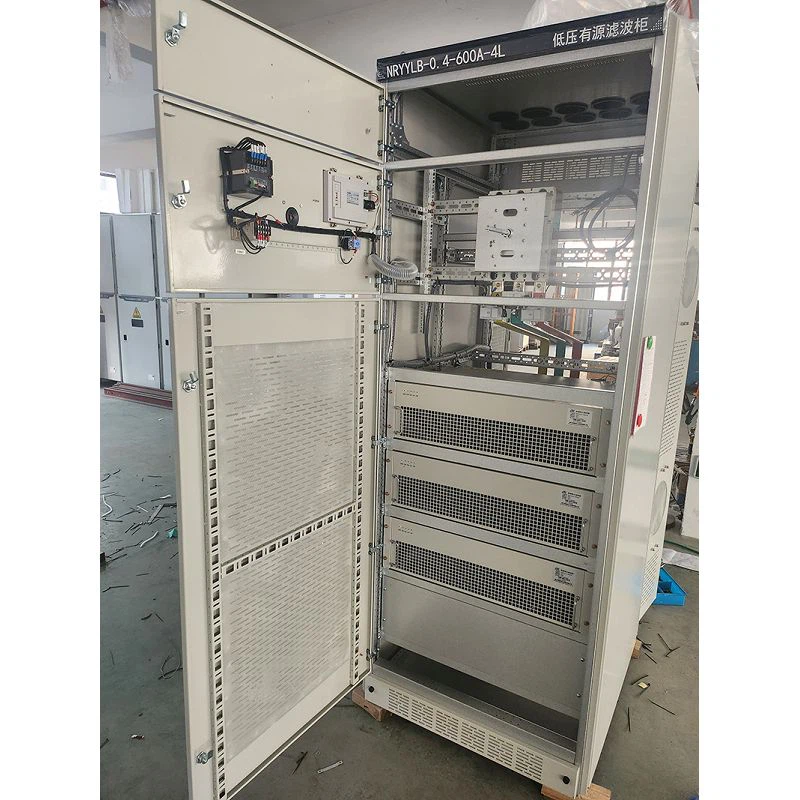
A harmonic filter is a device that reduces, or mitigates, harmonics to tolerable levels. They are commonly used to lower harmonic distortion to the levels detailed in IEEE 519, the IEEE Recommended Practice and Requirements for Harmonic Control in Electrical Power Systems. Harmonic filters solve problems in markets such as Oil & Gas, HVAC, Water/Wastewater and Mining industries. When harmonics are left unaddressed, it can lead to expensive damage to components, downtime, or penalties from utilities providers.


Prevent equipment failure and breakdowns
When many small harmonic-producing devices are collectively causing large amounts of harmonic pollution, filtering the main power supply is a very useful solution.harmonic filters effectively prevent failures and breakdowns of devices since they help correct non-linear loads. The filters also provide energy efficiency, which helps extend the durability of the device.
Help in maximum use of installed capacity
An ideal example of harmonic filters maximizing installation capacity is their use in the AC lines parallel to the loads that produce offending harmonics. The harmonic filters inject inverted current into the AC lines and cancel harmonics, improving electrical stability.
Improve energy efficiency
One of the best aspects of harmonic filters is that they are scalable and sized to the harmonic current for multiple loads. You can also install additional units if the total harmonic current exceeds the rating of the single harmonic filter. They also decrease the emission of carbon dioxide.
Reliable and provide continuity
Harmonic Filters are handy for areas with significant non-linear loads and many DC drives because they reduce production disruptions. Therefore, these filters also extend the device's life, enabling them to perform consistently well.
Curb service and maintenance costs
Any electrical device that operates at maximum efficiency is bound to work without issues. This theory is applicable for devices with harmonic filters. Unless the capacitors and resistors are required, the harmonic filter does not require custom fabrication because it is largely impedance-independent. According to the manufacturers, harmonic filters can handle wideband harmonic frequencies to minimize service costs.
Prevent and reduce energy loss
Harmonic pollution is synonymous with energy loss because it affects electrical installations' reliability, safety, and efficiency. An harmonic filter installed on the main power supply can counteract all harmonic currents before reaching the transformer. They also reduce the absorption of reactive power and reduce wear and tear, thereby preventing energy loss.

Variable Frequency Drives
The most common application for Active Harmonic Filters is the compensation of harmonics generated by variable frequency drives, often referred to as VFDs or Frequency Converters. Drive systems have the benefits of lower losses and increased production flexibility at the cost of higher harmonics emissions. Harmonics emissions make passive compensation unsuitable. Active harmonic filter, especially with a modular approach, allows successive installation and mitigation of selected harmonics.
Furnaces
Furnaces and casting processes are known to give rise to both flicker and harmonics. This is largely due to being some of the most energy intensive production processes today. Active Harmonic Filter is ideal to combat both of these issues to increase production stability and reduce effects on the grid.
Lighting
Light systems can cause harmonics that heat neutral conductors and disturb nearby equipment. This can mean production disturbances and unnecessary maintenance costs. Modern energy saving lamps may be more likely to cause disturbances depending on type. Active Harmonic Filters are well suited to combat these problems.
Welding Plants
Harmonic Filters can mitigate Flicker.Electrical welding systems place uneven demands with extremely high peaks in current demand during short periods. The resulting highly fluctuating voltage levels cause flicker. Flicker emissions can cause disturbances with other electrical consumers such as neighboring industries or residential areas and can cause reliability issues with nearby equipment.
Active Harmonic Filter
Active Harmonic Filter an active harmonic filter is something like a boost regulator. The concept used in an active filter is the introduction of current components using power electronics to remove the harmonic distortions produced by the non-linear load. Active harmonic filters are mostly used for low-voltage networks.There are three types of active harmonic filters based on the way they are connected to the AC distribution network.
Passive Harmonic Filter
Passive Harmonic Filter a passive harmonic filter is built using an array of capacitors, inductors, and resistors. It can take the form of a simple line reactor or may use a series of parallel resonant filters to eliminate harmonics. Passive harmonic filters are also divided based on the way they are connected with the load.
Inverter topology
Most modern AHFs are built on a 3-level NPC inverter topology which brings several benefits compared to AHF's built on the conventional 2-level topology. In a 3-level topology, the switching frequency and voltage stress are distributed among the IGBTs. Reduced stress extends the lifetime of the power electronics. 3-level NPC inverter produces an output waveform that is closer to sinusoidal, which enables a reduced physical size of the whole AHF system, due to the smaller LC-filter. Higher efficiency, lower losses, and lower noise levels are also achieved. These make the overall cost of ownership much lower.
Losses
Depending on design and topology, AHFs can have higher or lower losses. Checking the losses is important as they will reduce the life cycle cost of the investment. Usually, AHF's have about 2-3% losses (depending on rated power). AHF's built on 3-level NPC inverter topology have lower losses than 2-level ones. Depending on the user profile, reduced losses create a potential for considerable financial savings if the LCC is calculated over a period of a few years.
Response time
Some power quality phenomena occur extremely fast, requiring the mitigation to be even faster. If the process is affected by fast voltage fluctuations or transients, it is very important to evaluate the AHF's overall response time. Typical applications that require fast mitigation are for example welding machines, lifts, and cranes.
Interharmonics
Interharmonics are usually caused by synchronization issues. If the installation includes inter harmonic sources, the manufacturer should be consulted as not all AHFs can deal with this. It is a common issue with cyclo converters or some types of older wind turbine generators.
Harmonic compensation capacity
Harmonics can be seen in the odd and even orders. Common capacity for AHFs is 25th or 50th harmonic order. Sometimes there is a claim of being able to mitigate the 51st harmonic, which has little value as harmonic orders of 51st and above do not appear in electric power systems. An important issue is that the AHF can offer the possibility of selecting which harmonic order to compensate. For some devices, it is possible to select the whole harmonic spectrum (1st to 50th, odd and even), but for some others, only a few harmonic orders can be selected. Depending on the application, the capacity to compensate for a certain harmonic order is a critical issue affecting the whole system's performance.
Electromagnetic compatibility (EMC)
In some countries, there are strict guidelines regarding the EMC. To be sure that the AHF is not causing interference it must be fitted with a properly designed EMC filter.
Voltage
AHFs are offered in a range of voltages, the most common is 200V up to 690V. Some manufacturers can produce AHFs for even higher voltages, up to 1000V, without a step-up transformer, reducing costs and footprint. It is possible to connect AHFs to medium voltage systems using a suitable step-up transformer. Step-up (or step-down) transformers can reduce compensation performance due to increased impedance between the AHF and network.
Measurement
The Harmonic Filter continuously monitors the voltage and current waveforms at its connection point to the electrical system using built-in sensors and current transformers. This allows it to analyse the harmonic content and identify the frequencies and magnitudes of the undesirable harmonics.
Signal Processing
Once the harmonic content is measured, the Harmonic Filter processes this data to calculate the required compensation current. Advanced signal processing algorithms are employed to accurately determine the appropriate corrective current needed to cancel out the undesired harmonics.
Generation of Counteracting Current
Based on the signal processing results, the Harmonic Filter generates a compensating current that is 180 degrees out of phase with the detected harmonic currents. This counteracting current is then injected into the electrical system to neutralize the effects of the harmonics.
Continuous Adjustment
The Harmonic Filter continuously adjusts the generated compensating current to adapt to changes in the harmonic content of the electrical system. This ensures that the filter remains effective in mitigating harmonics under varying load conditions and harmonic distortion levels.
Monitoring and Control
Throughout the operation, the Harmonic Filter constantly monitors the system's harmonic content to ensure that the compensation current remains effective. Advanced control algorithms are utilized to maintain the filter's performance and make real-time adjustments as necessary.
Identify the problem
If you're troubleshooting or maintaining your harmonic filters, the first step is to identify the problem or symptom that could indicate a malfunction or failure. Common signs of harmonic filter problems include excessive heat or noise from the filter or its components, blown fuses, tripped breakers, damaged capacitors, abnormal voltage or current readings or fluctuations, poor power factor, low efficiency, equipment malfunction or failure due to harmonic interference, and error codes or alarms from the filter controller or monitoring system.
Check the filter settings
The next step in troubleshooting and maintaining your harmonic filters is to check the filter settings and parameters. Depending on the type and model of your filter, you may have different options and modes to adjust the filter operation and performance. For example, some active filters have a tuning mode that allows you to set the filter response to specific harmonic orders or frequencies. Some hybrid filters have a switching mode that enables you to switch between passive and active filtering or between different passive filter configurations. You should consult the filter manual or manufacturer for the recommended settings and parameters for your application and load conditions.
Perform routine maintenance
The third step in troubleshooting and maintaining your harmonic filters is to perform routine maintenance tasks to prevent or reduce the risk of problems and failures. This includes cleaning the filter enclosure and components, checking the wiring and connections, testing the components for signs of wear or malfunction, replacing faulty or worn-out components, updating the filter firmware or software if necessary, and reviewing the performance and operation data. You should follow the manufacturer's guidelines for frequency and procedures of maintenance tasks, and keep a record of activities and results for future reference.
Troubleshoot specific issues
The fourth step in troubleshooting and maintaining your harmonic filters is to troubleshoot specific issues that may arise during the filter operation or maintenance. These issues may include filter overload or underload, filter resonance, or filter instability. Filter overload or underload occurs when the current exceeds or falls below the rated value, causing the filter to overheat, trip, or lose effectiveness. This could be caused by changes in the load profile, system configuration, or filter settings. Filter resonance happens when the filter impedance matches the system impedance at a certain harmonic frequency, leading to an increase in voltage and current harmonics. Filter instability occurs due to feedback or interaction with other filters or devices in the system.
Verify the results
The fifth step in troubleshooting and maintaining your harmonic filters is to verify the results of your actions and ensure that the filter is working properly and effectively. You should measure the voltage and current harmonics at the filter input and output again using a power quality analyzer or a harmonic meter. You should compare the results with the previous measurements and the expected values. You should also check the filter temperature, noise, and status indicators to confirm that they are within normal ranges.
How Do You Coordinate Your Harmonic Filters With Other Power Factor Correction Devices?
Understand your load profile
Before you install any PFC device, you need to understand your load profile, which is the variation of your active and reactive power demand over time. Your load profile will determine the type, size, and location of your PFC devices, as well as the optimal settings for your harmonic filters. You can use a power quality analyzer or a smart meter to measure and monitor your load profile, as well as identify the sources and levels of harmonic distortion in your system.
Choose the right type of harmonic filter
There are different types of harmonic filters, such as passive, active, and hybrid, that can be used to mitigate harmonic distortion and improve power factor. Passive filters are composed of capacitors and reactors that are tuned to specific harmonic frequencies and connected in series or parallel to the load. Active filters are electronic devices that inject counteracting currents to cancel out the harmonics generated by the load. Hybrid filters are a combination of passive and active filters that can offer more flexibility and performance. The choice of harmonic filter depends on your load characteristics, system configuration, and budget.
Avoid resonance and overcompensation
One of the main challenges of coordinating harmonic filters with other PFC devices is to avoid resonance and overcompensation. Resonance occurs when the natural frequency of the system matches the frequency of the harmonic filter or the capacitor, resulting in amplified harmonics and voltage distortion. Overcompensation occurs when the total reactive power supplied by the PFC devices exceeds the reactive power demand of the load, resulting in leading power factor and voltage rise. To avoid these problems, you need to carefully design and control your PFC devices, as well as use detuned reactors or filters that are not tuned to the system resonance frequency.
Use a central or distributed approach
Another aspect of coordinating harmonic filters with other PFC devices is to decide whether to use a central or distributed approach. A central approach means installing a single or a few large PFC devices at the main distribution board or the transformer level, while a distributed approach means installing multiple smaller PFC devices at the individual load or feeder level. The advantages and disadvantages of each approach depend on your system layout, load diversity, and installation costs. Generally, a central approach can offer more simplicity and economy, while a distributed approach can offer more flexibility and accuracy.
Zhejiang Nengrong Electric Power Equipment Co.,Ltd. was established in 2007 (formerly known as Yueqing Zhongrong Power Compensation Equipment Co., Ltd.). It is a high-tech enterprise that provides power system power quality monitoring and control, reactive power compensation, harmonic control, and power safety protection equipment as its core business. Since its establishment, we have always adhered to the concept of "energy conservation creates value, protection builds harmony" and are committed to providing high-quality products and comprehensive solutions for users in various fields to improve power quality, optimize control, save energy and reduce consumption, and protect power grid safety.
Factory pictures


certificate


FAQ
Q: What is the difference between harmonic filter and line reactor?
Q: Do harmonic filters correct power factor?
Q: How do you size a harmonic filter?
Q: Is an active harmonic filter better than a line reactor?
Q: Why do we need harmonic filters?
Q: What is the main principle of active harmonic filtering?
Q: How do you reduce a harmonic filter?
Q: Is a harmonic filter a capacitive load?
Q: What is the difference between active and passive harmonic filters?
Q: Are harmonics good or bad?
Q: Why are harmonics important?
Q: How does harmonic affect frequency?
Q: What is a harmonic filter for dummies?
Q: What are the components of harmonic filter?
Q: Does EMC filter reduce harmonics?
Q: How do you size a harmonic filter for VFD?
Q: What is three phase harmonic filter?
Q: What is rating of harmonic filter?
Q: What are the advantages of passive harmonic filter?
Q: What is harmonic mean filtering?
We're well-known as one of the leading harmonic filter manufacturers and suppliers in China. If you're going to wholesale high quality harmonic filter, welcome to get quotation from our factory. Also, customized service is available.
harmonic filter for flyback converters, harmonic filter for isolated converters, harmonic filter for medium power converters