

In the contemporary industrial and commercial landscape, energy efficiency stands as a pivotal concern for businesses striving to cut costs and minimize their environmental footprint. One technology that has gained significant attention in this regard is the Capacitor Harmonic Filter. As a supplier of Capacitor Harmonic Filters, I am frequently asked whether these devices can truly reduce power consumption. In this blog post, I will delve into the science behind Capacitor Harmonic Filters, explore their impact on power consumption, and provide real - world insights to answer this question.
Understanding Harmonics and Their Impact on Power Systems
Before we discuss the role of Capacitor Harmonic Filters, it's essential to understand what harmonics are and how they affect power systems. In an ideal power system, the voltage and current waveforms are pure sine waves with a single frequency (usually 50 or 60 Hz, depending on the region). However, in real - world scenarios, non - linear loads such as variable frequency drives, switch - mode power supplies, and arc furnaces distort these waveforms, generating harmonics.
Harmonics are multiples of the fundamental frequency. For example, the 3rd harmonic has a frequency three times that of the fundamental frequency, the 5th harmonic has a frequency five times the fundamental, and so on. These harmonic currents can cause a range of problems in power systems, including overheating of transformers, motors, and cables, increased power losses, and interference with sensitive electronic equipment.
One of the most significant impacts of harmonics on power systems is the increase in power losses. When harmonic currents flow through the electrical network, they encounter resistance in the conductors, transformers, and other components. According to Joule's law ((P = I^{2}R)), where (P) is the power loss, (I) is the current, and (R) is the resistance, the power loss is proportional to the square of the current. Since harmonic currents add to the total current in the system, they can significantly increase the power losses, leading to higher energy consumption and costs.
How Capacitor Harmonic Filters Work
A Capacitor Harmonic Filter is a device designed to mitigate the effects of harmonics in power systems. It consists of capacitors and inductors connected in a specific configuration to create a resonant circuit at a particular harmonic frequency. When the filter is connected to the power system, it provides a low - impedance path for the harmonic currents, diverting them away from the main electrical network.
The basic principle behind the operation of a Capacitor Harmonic Filter is resonance. At the resonant frequency, the impedance of the filter becomes very low, allowing the harmonic currents to flow through the filter rather than through the rest of the power system. By reducing the harmonic currents in the main network, the filter helps to improve the power quality and reduce the power losses caused by harmonics.

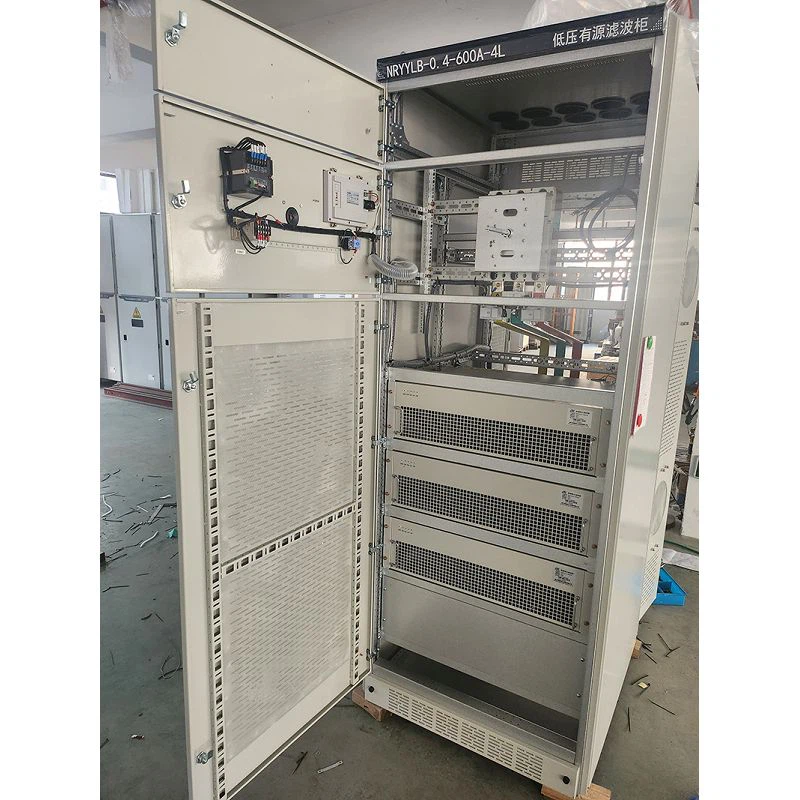
In addition to reducing harmonic currents, Capacitor Harmonic Filters can also improve the power factor of the system. Power factor is a measure of how effectively electrical power is being used in a system. A low power factor means that a significant portion of the electrical power is being wasted in the form of reactive power. Capacitor Harmonic Filters can supply reactive power to the system, thereby improving the power factor and reducing the overall power consumption.
Can Capacitor Harmonic Filters Reduce Power Consumption?
The short answer is yes, Capacitor Harmonic Filters can reduce power consumption. By mitigating the effects of harmonics and improving the power factor, these filters can lead to significant energy savings in power systems.
Reduction of Power Losses
As mentioned earlier, harmonics increase the power losses in power systems due to the additional current flowing through the conductors and components. By diverting the harmonic currents away from the main network, Capacitor Harmonic Filters reduce the total current in the system, which in turn reduces the power losses according to Joule's law. For example, in a system with a high level of harmonics, the power losses can be reduced by up to 20 - 30% after installing a Capacitor Harmonic Filter.
Improvement of Power Factor
A low power factor requires the power system to supply more apparent power to meet the real power demand. This results in higher current flow in the system, leading to increased power losses in the conductors and transformers. Capacitor Harmonic Filters can supply reactive power to the system, improving the power factor and reducing the apparent power requirement. As a result, the current flow in the system is reduced, leading to lower power losses and energy consumption.
Case Studies
Numerous case studies have demonstrated the effectiveness of Capacitor Harmonic Filters in reducing power consumption. For instance, in a large manufacturing plant, the installation of a Capacitor Harmonic Filter resulted in a 15% reduction in the plant's overall energy consumption. The filter not only reduced the harmonic distortion in the power system but also improved the power factor from 0.8 to 0.95, leading to significant cost savings on electricity bills.
Comparison with Other Harmonic Mitigation Technologies
While Capacitor Harmonic Filters are an effective solution for reducing power consumption, it's important to compare them with other harmonic mitigation technologies, such as 0.4kv 750A Low Voltage Active Power Filter and Active harmonic filter module.
Active power filters are more versatile than Capacitor Harmonic Filters as they can dynamically adjust to changes in the harmonic spectrum. They can detect and compensate for a wide range of harmonics in real - time, making them suitable for applications with highly variable loads. However, active power filters are generally more expensive than Capacitor Harmonic Filters and require more complex control systems.
Capacitor Harmonic Filters, on the other hand, are a more cost - effective solution for applications with relatively stable harmonic spectra. They are simpler in design and easier to install and maintain. In many cases, a combination of Capacitor Harmonic Filters and active power filters can be used to achieve the best results in terms of harmonic mitigation and power consumption reduction.
Conclusion
In conclusion, Capacitor Harmonic Filters can play a crucial role in reducing power consumption in industrial and commercial power systems. By mitigating the effects of harmonics and improving the power factor, these filters can lead to significant energy savings and cost reductions. As a supplier of Capacitor Harmonic Filters, I have witnessed firsthand the positive impact that these devices can have on power systems.
If you are interested in reducing your power consumption and improving the power quality of your electrical system, I encourage you to consider investing in a Capacitor Harmonic Filter. Our team of experts can help you select the right filter for your specific application and provide you with professional installation and maintenance services. Contact us today to start a discussion about how we can help you achieve your energy efficiency goals.
References
- "Power Quality in Electrical Systems" by George J. Anders.
- "Harmonics in Power Systems: Principles, Analysis, and Filter Design" by Shyh - Jer Huang.
- Industry reports on power quality and energy efficiency.