

In the realm of industrial automation, stability is the cornerstone upon which efficient and reliable operations are built. One crucial element that significantly contributes to this stability is the Capacitor Harmonic Filter. As a supplier of these essential devices, I've witnessed firsthand how they transform industrial automation systems, enhancing their performance and longevity.
Understanding the Problem: Harmonics in Industrial Automation
Industrial automation systems rely heavily on a variety of electrical equipment, such as variable frequency drives (VFDs), programmable logic controllers (PLCs), and switch - mode power supplies. While these devices offer unparalleled efficiency and control, they also generate harmonics. Harmonics are unwanted electrical frequencies that are integer multiples of the fundamental frequency (usually 50 or 60 Hz).
These harmonics can cause a multitude of problems in an industrial automation system. They can lead to overheating of transformers, motors, and cables, reducing their lifespan and increasing the risk of equipment failure. Harmonics can also cause voltage distortion, which may result in inaccurate readings from sensors and meters, leading to incorrect control decisions in the automation process. Moreover, they can interfere with communication systems within the industrial facility, causing data transmission errors and disruptions.
How Capacitor Harmonic Filters Work
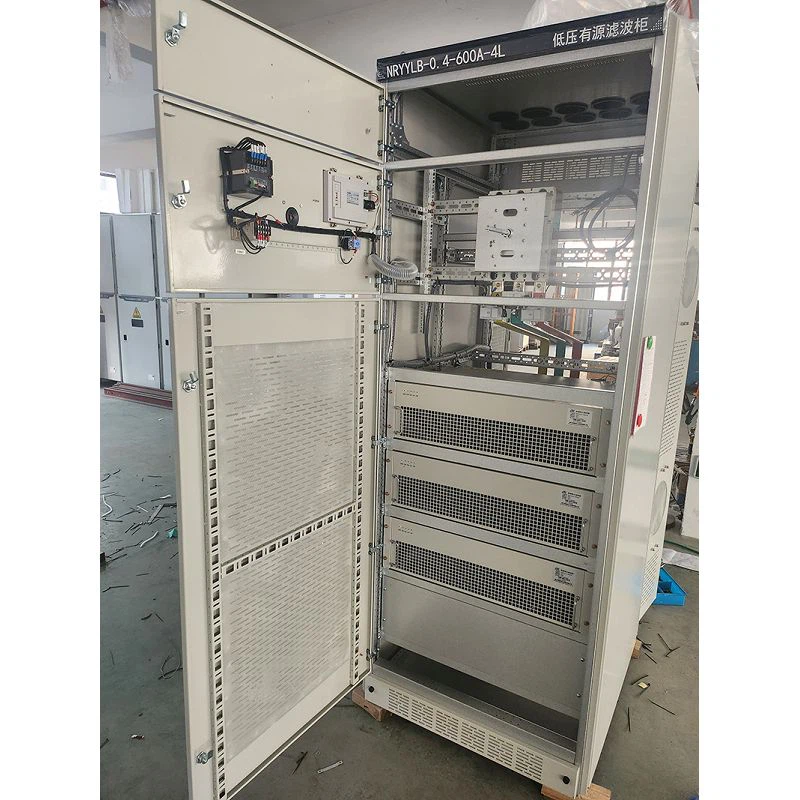
A Capacitor Harmonic Filter is designed to mitigate the effects of harmonics. It consists of a combination of capacitors, inductors, and resistors arranged in a specific configuration. The filter is connected in parallel to the electrical load in the system.
The basic principle behind a capacitor harmonic filter is resonance. Capacitors and inductors have reactive properties that change with frequency. By carefully selecting the values of the components in the filter, it can be tuned to resonate at specific harmonic frequencies. When the filter resonates at a particular harmonic frequency, it presents a low - impedance path for that frequency. As a result, most of the harmonic current is diverted through the filter instead of flowing through the rest of the electrical system.
For example, if the fifth harmonic is a major problem in an industrial automation system, the capacitor harmonic filter can be tuned to resonate at the fifth harmonic frequency (e.g., 250 Hz in a 50 - Hz system). This way, the fifth - harmonic current is effectively absorbed by the filter, reducing its presence in the main electrical network.
Improving Power Factor
One of the significant benefits of using a capacitor harmonic filter is the improvement of the power factor. Power factor is a measure of how effectively electrical power is being used in a system. In industrial automation systems, a low power factor can lead to increased energy consumption and higher electricity bills.

Capacitors in the harmonic filter provide reactive power to the system. Reactive power is the power that oscillates between the source and the load without doing any useful work. By supplying reactive power locally through the filter, the overall reactive power demand from the utility grid is reduced. This results in an improved power factor, which means that the electrical system is using power more efficiently.
An improved power factor also reduces the current flowing through the electrical distribution system. Since power losses in cables and transformers are proportional to the square of the current, a lower current means less power loss. This not only saves energy but also reduces the heat generated in the electrical equipment, extending its lifespan.
Enhancing Equipment Performance and Reliability
By reducing harmonics and improving the power factor, capacitor harmonic filters directly enhance the performance and reliability of the equipment in an industrial automation system.
Motors are a critical component in many industrial automation processes. Harmonics can cause additional heating in motors, which can lead to insulation breakdown and premature failure. With a capacitor harmonic filter in place, the harmonic content in the motor's power supply is reduced, resulting in cooler operation and longer motor life.
PLCs and other control devices are also sensitive to voltage distortion caused by harmonics. A stable and clean power supply is essential for their accurate operation. The capacitor harmonic filter helps to maintain a more stable voltage waveform, ensuring that these control devices function correctly. This reduces the risk of control errors and system malfunctions, leading to more reliable automation processes.
Complementary Solutions: Active Harmonic Filter Modules
In some cases, especially in complex industrial automation systems with high - level harmonic distortion, a Active harmonic filter module can be used in conjunction with a capacitor harmonic filter.
Active harmonic filter modules are more advanced and flexible compared to passive capacitor harmonic filters. They use power electronics and advanced control algorithms to detect and cancel out harmonics in real - time. These modules can adapt to changing harmonic conditions in the system, making them suitable for applications where the harmonic spectrum is variable.
When used together, the capacitor harmonic filter can handle the dominant and relatively stable harmonic frequencies, while the active harmonic filter module can take care of the remaining and more dynamic harmonics. This combination provides a comprehensive solution for harmonic mitigation in industrial automation systems.
High - Quality Shunt Active Power Filters
Another option for enhancing the stability of industrial automation systems is the use of a High Quality Shunt Active Power Filter. Shunt active power filters are connected in parallel to the electrical load, similar to capacitor harmonic filters.
These filters work by injecting a compensating current into the system that is equal in magnitude but opposite in phase to the harmonic current. This effectively cancels out the harmonic current, resulting in a clean and sinusoidal current waveform.
High - quality shunt active power filters offer fast response times and high - precision control. They can quickly adapt to changes in the harmonic content of the system, providing continuous and effective harmonic mitigation. In industrial automation systems where rapid changes in load and harmonic conditions are common, shunt active power filters can play a crucial role in maintaining system stability.
Conclusion
In conclusion, a capacitor harmonic filter is an indispensable tool for improving the stability of industrial automation systems. By mitigating harmonics, improving the power factor, and enhancing equipment performance and reliability, it helps industrial facilities operate more efficiently and cost - effectively.
In some cases, complementary solutions such as active harmonic filter modules and high - quality shunt active power filters can be used to provide a more comprehensive harmonic mitigation strategy.
If you are looking to enhance the stability of your industrial automation system, I encourage you to consider our range of capacitor harmonic filters and related products. Our experienced team can help you select the most suitable solution for your specific needs. Contact us to start a procurement discussion and take the first step towards a more stable and efficient industrial automation system.
References
- IEEE Standard 519-2014, “IEEE Recommended Practices and Requirements for Harmonic Control in Electrical Power Systems”.
- Dugan, Roger C., Mark F. McGranaghan, and Surya Santoso. Electric Power Systems Quality. McGraw - Hill, 2003.
- Chapman, Stephen J. Electric Machinery Fundamentals. McGraw - Hill, 2012.