

The railway power system is a complex and critical infrastructure that requires a stable and high - quality power supply to ensure the safe and efficient operation of trains. With the increasing use of power - electronic devices in railway systems, harmonic pollution has become a significant issue. As a supplier of Capacitor Harmonic Filters, I often receive inquiries about whether these filters can be used in railway power systems. In this blog, I will delve into this topic and provide a comprehensive analysis.
Understanding Harmonics in Railway Power Systems
Harmonics are unwanted frequencies that are integer multiples of the fundamental frequency (usually 50Hz or 60Hz). In railway power systems, harmonics are mainly generated by power - electronic converters, such as those used in electric locomotives and traction substations. These converters use switching devices to control the power flow, which can introduce non - linear loads and cause harmonic distortion in the power supply.
The presence of harmonics in railway power systems can lead to several problems. Firstly, it can cause overheating of electrical equipment, such as transformers, motors, and capacitors. This overheating reduces the lifespan of the equipment and increases the risk of breakdowns. Secondly, harmonics can interfere with the normal operation of communication and control systems in the railway, leading to signal distortion and potential safety hazards. Thirdly, harmonic distortion can increase power losses in the system, resulting in higher energy consumption and operating costs.

How Capacitor Harmonic Filters Work
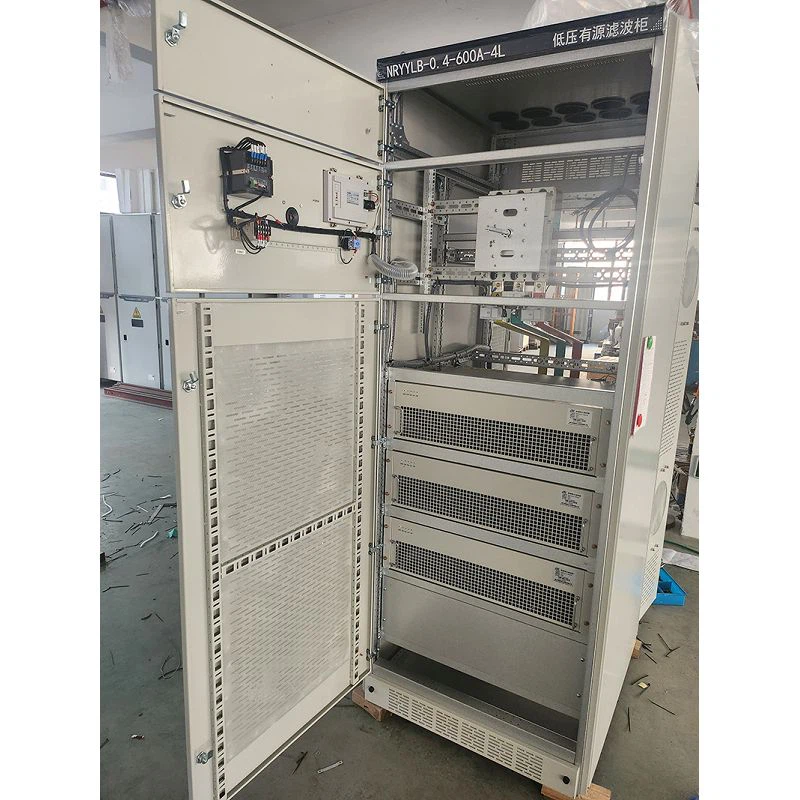
A Capacitor Harmonic Filter is a device designed to mitigate harmonic distortion in electrical power systems. It consists of capacitors and inductors connected in a specific configuration to form a resonant circuit. The filter is tuned to a particular harmonic frequency or a range of frequencies, and it provides a low - impedance path for the harmonic currents.
When harmonic currents flow in the power system, they are diverted through the capacitor harmonic filter instead of flowing through other electrical equipment. This reduces the harmonic content in the power supply and improves the power quality. In addition to harmonic mitigation, capacitor harmonic filters can also improve the power factor of the system. A higher power factor means that the electrical equipment can use the electrical energy more efficiently, reducing power losses and energy costs.
Suitability of Capacitor Harmonic Filters in Railway Power Systems
Advantages
- Cost - effectiveness: Capacitor harmonic filters are relatively inexpensive compared to other types of harmonic mitigation devices, such as active power filters. For large - scale railway power systems, cost is an important consideration, and capacitor harmonic filters can provide a cost - effective solution for harmonic control.
- Simple installation and maintenance: These filters are relatively simple in structure and can be easily installed in existing railway power systems. Their maintenance requirements are also relatively low, which is beneficial for the long - term operation of the railway power system.
- Power factor improvement: As mentioned earlier, capacitor harmonic filters can improve the power factor of the system. In railway power systems, where large amounts of electrical energy are consumed, improving the power factor can lead to significant energy savings.
Limitations
- Fixed tuning: Capacitor harmonic filters are tuned to specific harmonic frequencies. In railway power systems, the harmonic spectrum can vary depending on the operating conditions of the trains and the power - electronic equipment. If the harmonic frequencies change, the effectiveness of the fixed - tuned capacitor harmonic filters may be reduced.
- Resonance risk: Capacitor harmonic filters can introduce resonance problems in the power system. Resonance occurs when the natural frequency of the filter circuit coincides with the frequency of the harmonic currents or the system impedance. Resonance can cause excessive current and voltage levels, which can damage the filter and other electrical equipment in the system.
Mitigating the Limitations
To address the limitations of capacitor harmonic filters in railway power systems, several measures can be taken.
- Variable - tuned filters: Instead of using fixed - tuned filters, variable - tuned capacitor harmonic filters can be employed. These filters can adjust their tuning frequency according to the changes in the harmonic spectrum. This ensures that the filter can effectively mitigate harmonics under different operating conditions.
- System analysis and design: Before installing capacitor harmonic filters in a railway power system, a detailed system analysis should be conducted. This analysis should include the measurement of the harmonic spectrum, the calculation of the system impedance, and the assessment of the resonance risk. Based on the analysis results, the filter parameters can be properly designed to avoid resonance problems.
Case Studies
There have been several successful applications of capacitor harmonic filters in railway power systems. For example, in some urban rail transit systems, capacitor harmonic filters have been installed in traction substations to reduce harmonic distortion. These filters have effectively improved the power quality of the system, reduced the overheating of electrical equipment, and improved the reliability of the railway operation.
In another case, a high - speed railway project used Harmonic Filter Cabinet to mitigate harmonics generated by the electric locomotives. The filter cabinets were designed to be modular and easy to install, and they were able to provide a stable and reliable solution for harmonic control.
Comparison with Other Harmonic Mitigation Devices
- Active power filters: 0.4kv 750A Low Voltage Active Power Filter can provide more flexible and accurate harmonic mitigation compared to capacitor harmonic filters. Active power filters can detect and compensate for harmonics in real - time, and they can adapt to changes in the harmonic spectrum more effectively. However, active power filters are more expensive and have higher power consumption.
- Passive filters: Capacitor harmonic filters are a type of passive filter. Other passive filters, such as inductive filters, can also be used for harmonic mitigation. Inductive filters are more suitable for high - frequency harmonics, while capacitor harmonic filters are more effective for low - to medium - frequency harmonics.
Conclusion
In conclusion, capacitor harmonic filters can be used in railway power systems to mitigate harmonic distortion and improve power quality. They offer several advantages, such as cost - effectiveness, simple installation, and power factor improvement. However, they also have some limitations, such as fixed tuning and resonance risk. By taking appropriate measures to address these limitations, capacitor harmonic filters can provide a reliable and cost - effective solution for harmonic control in railway power systems.
If you are involved in a railway power system project and are looking for a solution to harmonic problems, I encourage you to consider capacitor harmonic filters. As a professional supplier of capacitor harmonic filters, we have the expertise and experience to provide you with high - quality products and customized solutions. Contact us to start a discussion about your specific requirements and explore how our products can meet your needs.
References
- IEEE Standard 519 - 2014, "IEEE Recommended Practices and Requirements for Harmonic Control in Electrical Power Systems".
- CIGRE Technical Brochure 549, "Harmonics in Railway Power Supply Systems".
- "Power Quality in Electrical Systems" by Badrul H. Chowdhury and Mohammad A. S. Masoum.